
Embroidery design fonts for a name you can read
How embroidery design fonts stay readable: satin stitch, letter height, and the split between a desktop font, a BX font, and letter stitch files.
Published · Updated
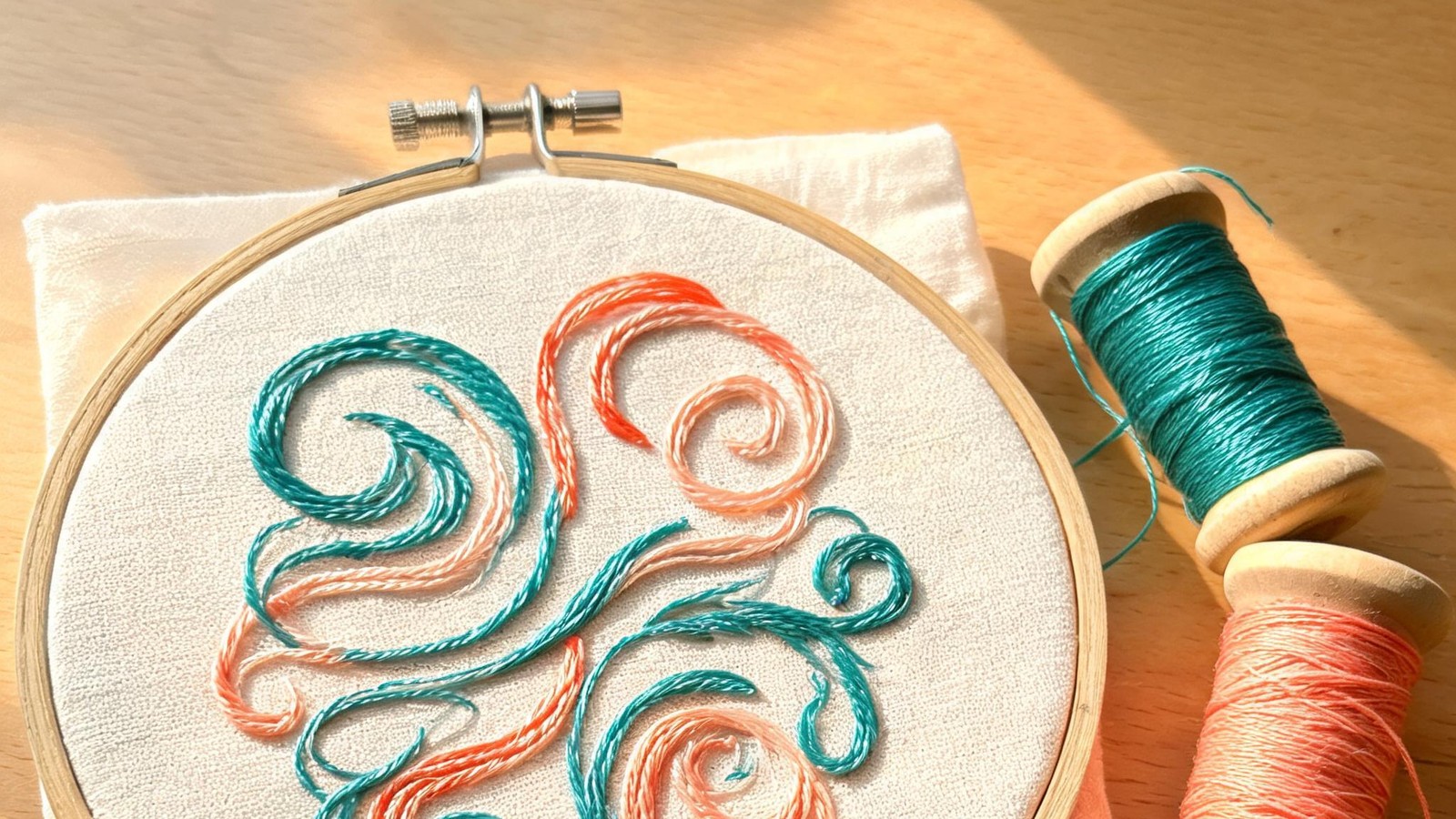
For a name, use a digitized block alphabet with columns of similar width, or a script whose strokes can hold satin, and stay inside that font's own height range. The names below are specific stitch fonts from captured maker pages. They are not in rank order, and they are not a sales list.
Wilcom's standard font page calls block fonts a sans-serif style that is clear and easy to read, and very common with names and business logos. Wilcom's custom-font notes say letter columns should be of similar width, and that those columns stitch more cleanly than tight curves, sharp corners, or very fine, very wide, or curved serifs. That style page says closest join joins letters at the closest point to minimize trims.
- Block2 is a block alphabet on Wilcom's standard font table, recommended from 6 mm to 20 mm, with closest join. That join is the clean-sew reason: fewer trims, in a sans-serif block group.
- Easy Script is a script alphabet on that same table, recommended from 10 mm to 30 mm, also closest join. The style page describes script fonts as fluid strokes that connect, like handwriting.
- Small Block1 is a small-font alphabet on that table, recommended from 4 mm to 6 mm. The style page describes small fonts as 6 mm and below, including satin stitch columns with push and pull adjustments.
Those three are digitized embroidery fonts that are standard with EmbroideryStudio, from the standard font page. They are not desktop outline files.
A BX installer is the other ready alphabet. Machine Embroidery Geek's font list names three free Embrilliance BX fonts: Almost Fancy, a casual script; Blockish, a sans-serif face; and Textured, whose letter thickness that page says makes it suitable for names or monograms on towels. That list says those three are BX only, and that you can type them in the free version of Embrilliance. Embrilliance's FAQ describes a BX file as an installation file for keyboard-ready embroidery fonts, not as the format the machine loads. The install steps are in how to add fonts to Embrilliance.
Childs Play and Anniversary are garment examples, not that digitized table. Bernina's lettering dialog names a simple font such as Childs Play for a child's outfit and an elegant script such as Anniversary for a nightdress, and that dialog selects supplied embroidery fonts or converts TrueType and OpenType outlines. Wilcom's font list says an on-the-fly TrueType conversion may not match a manually digitized font.
The file the machine sews is a built-in alphabet, a letter stitch file, or a stitch file saved after you type in a keyboard font. Wilcom's satin-lettering page and Bernina's lettering settings both fill lettering with satin by default.
Three files people call an embroidery font
A desktop font is a TrueType or OpenType file from a word processor. Wilcom's font list treats Embroidery and TrueType as separate types, and its groups, block, serif, script, and decorative, apply only to TrueType. Bernina's lettering dialog can convert a TrueType or OpenType font into embroidery. That conversion happens in software. The TrueType file itself is a different file from the one the machine sews.
A letter stitch file is a sewn glyph, or a set of them sold as an alphabet. Embrilliance's font history describes stitch-based fonts as machine-format stitch files mapped to the keyboard, and it describes older alphabet collections as stitch files you place one letter at a time. Sulky's font project says spacing those letters into a word often needs software so the word looks even, and that sizing the letters up or down by 20% on the machine screen can distort the stitches or the density.
A BX font is the installer for a keyboard alphabet inside Embrilliance. Embrilliance's FAQ says the .BX format is an installation file for the Embrilliance platform, most frequently used to install keyboard-ready, typable embroidery fonts. Embrilliance's font history says that installer covers both stitch-based fonts and native fonts that store the digitizer's shapes and settings. You type the name, then save a stitch file for the machine. The install steps are in how to add fonts to Embrilliance.
Machines also ship with alphabets already on board. Sulky's lettering project starts by scrolling the built-in fonts, or by finding machine embroidery fonts online. If you want a face that is not already loaded, Bernina's downloaded-font project says you can download fonts to use in embroidery software. Brother owners comparing built-in designs can continue with Brother embroidery designs.
Styles that stay readable on a name
The named alphabets above are the starting set. Wilcom's custom-font notes say letters are generally 20 to 40 mm in height when you are creating them, and that columns of similar width stitch more cleanly than tight curves, sharp corners, or very fine, very wide, or curved serifs. That creation range is not the same figure as each font's own minimum and maximum on the standard font table.
Bernina's lettering dialog groups TrueType fonts as block, serif, script, or decorative. Childs Play and Anniversary, named in the opening, are garment examples in that dialog, not a substitute for the digitized table. A full name and a three-letter monogram are different layouts. Monogram choices are in fonts for a monogram.
Script stays readable when the strokes can hold satin. On a ribbed knit, the fabric of many shirts, Bernina's downloaded-font project says a relatively bold font keeps the letters from getting lost in the texture. Bernina's downloaded-font project says some cursive fonts are too delicate: the thin lines may not show, and they can break when the fabric stretches, depending on the stabilizer. Shirt layouts are in embroidery designs for shirts.
Turning your own letter shapes into stitches is digitizing, not a font download. That job is in how to make embroidery designs.
How tall the letters should be
Use the font's own range, then check what that height does to the columns. Wilcom's underlay notes say most lettering used in designs is 15 mm high or less, and that the columns at those sizes are less than 3 mm wide for normal fonts, meaning fonts that are not heavy or block. Wilcom's underlay notes say lettering with heights under 5 mm should not have underlay, letters from 6 mm to 10 mm can have a center-run underlay, and lettering larger than 10 mm is large enough for edge-run underlay. Underlay can also prepare a napped fabric by flattening it.
Those heights refer to uppercase. Wilcom's font-selection page says recommended heights refer to uppercase letters, and that lowercase letters such as a and c are about 70% the height of a capital in many fonts digitized from a TrueType original. Raise the size if the lowercase would fall under the font's minimum.
Bernina's lettering dialog says to check the minimum and maximum for each font and stay inside them. Wilcom's large-lettering note gives the Adelle font a recommended minimum of 10 mm and a maximum of 50 mm. The same note says that if the lettering is too large the columns are too wide to stitch nicely, and if they are too small the column is too narrow. The usual fixes for a too-wide satin column are Auto Split, or a change of fill to tatami.
Column width has its own ceiling, separate from letter height. Wilcom's satin-stitch guide puts the ideal maximum width for a satin stitch around 12 mm, suggests staying within 10 mm, and treats a width of 15 mm as possible with a high risk of snagging.
On the Brother PE800 and SE2000, Brother's help page says the embroidered font size can be as small as 4 or 5 mm. That figure is what those two machines can sew. It is not a quality target for every alphabet. The underlay cutoff above still applies to letters that small.
Already-digitized letters resize only a little on the machine screen. Sulky's font project says sizing those letters up or down by 20% can distort the stitches or the density, and that a larger change is a software job.
Towel or shirt
A towel is napped, so the letters have to sit on top of the pile. Wilcom's underlay notes say underlay can prepare a napped fabric by flattening it, and that underlay also keeps cover stitches from sinking into soft fabric. Sulky's beach-towel project chooses an embossed monogram for heavily napped towels, and its featured letters are 7 inches so a single letter is visible from a distance on a large towel. For the hooping, Sulky's beach-towel project uses a water-soluble sticky-backed stabilizer, paper side up, scores the paper, and sticks the towel to the adhesive so the stabilizer is gone after the embroidery is complete. Towel hooping is in how to embroider on towels.
A shirt is often a knit. The bold-versus-thin-script note above is the font choice for that fabric, and the shirt page is embroidery designs for shirts. That beach-towel letter is a project size for a large towel, not a name height for a shirt chest.
Where a name font comes from
Use the named set above: Block2, Easy Script, and Small Block1 from Wilcom's standard font table, or Almost Fancy, Blockish, and Textured if you type a BX font in Embrilliance, as Machine Embroidery Geek's list names. Scroll the machine's built-in alphabets as well, as Sulky's lettering project describes. A three-letter monogram, if that is the job instead of a full name, is covered in fonts for a monogram.
The maker pages cited here group fonts by style and by size range. A sales ranking of faces is not in those pages.
The complete lettering collection is coming soon at $20.99.
The limit of this advice
One alphabet will not fit every towel and every shirt. A font that is clean at a capital height inside its own range can still fail if the lowercase falls under that minimum, or if a thin script lands on rib knit or terry. Check the font's minimum and maximum, and sew a test on the same fabric before you commit a name.
Questions
What is a good font for embroidery?
A digitized block alphabet such as Block2, sewn in satin stitch, inside that font's own height range. Wilcom's standard font table lists Block2, and Wilcom's custom-font notes favor columns of similar width over very fine serifs.
What are some good embroidery fonts for names?
Digitized block and script alphabets such as Block2 and Easy Script are on Wilcom's standard font table. Wilcom's standard font page calls block fonts clear and easy to read. Childs Play and Anniversary are garment examples in Bernina's lettering dialog, which can also convert an outline.
What is a good script font for embroidery?
Easy Script, a digitized script on Wilcom's standard font table, uses connecting strokes. On ribbed knit, Bernina's font project says a thin cursive may not show in the texture and can break when the fabric stretches.
What fonts look good embroidered?
Even columns, a height inside the font's own range, and a weight that matches the fabric. Wilcom's custom-font notes favor similar column widths. On ribbed knit, Bernina's font project uses a bolder face so the letters are not lost in the texture.
What font is used for embroidery?
There is not one face. Machines ship with built-in alphabets, and Wilcom's font list keeps purpose-built embroidery fonts separate from TrueType fonts.
What are some good fonts for machine embroidery?
Block, serif, script, and decorative are the desktop groups in Bernina's lettering dialog. For a name, pick the one whose strokes stay wide enough for satin stitch.
Where can I get embroidery fonts?
Open a digitized alphabet such as Block2 on Wilcom's standard font table, scroll the built-in alphabets as Sulky's lettering project describes, install a BX font such as Blockish as Machine Embroidery Geek's list names, or convert a TrueType or OpenType outline in embroidery software.
What is a BX font for embroidery?
Embrilliance's FAQ says a .BX file is an installation file for its platform, most often used to install keyboard-ready embroidery fonts. Embrilliance's font history says a stitch-based font is machine-format stitch files mapped to the keyboard, and a native font stores the digitizer's shapes.
What are some common fonts used in embroidery?
Named embroidery alphabets on Wilcom's standard font table include Block2, Easy Script, and Small Block1. Wilcom's font list keeps those embroidery fonts separate from TrueType fonts.
What is an easy script font to read?
One whose strokes stay wide enough that the lowercase still reads at the size you will sew. Wilcom's custom-font notes favor columns of similar width over tight curves and very fine serifs.
Related
- CollectionPlaceholder
Complete Lettering Collection
28 complete lettering styles in one download, so the font search ends.
Sources
- Wilcom: Satin lettering
- Wilcom: Setting lettering underlay
- Wilcom: Select embroidery fonts
- Wilcom: Custom font considerations
- Wilcom: Mastering Satin Stitch and Tatami Stitch in Embroidery (2024)
- Wilcom: Create Large Lettering for Garment Backs (2019)
- Embrilliance: FAQ: How do I use .BE embroidery files, BX Font Files, and Embrilliance Express?
- Embrilliance: Making Embroidery Font History: Stitch-Based Standards and Object-Based Superpowers (2021)
- Brother: Smallest font size
- Bernina: Create lettering via dialog
- Bernina: Adjusting lettering settings
- Bernina: Create unique wording with downloaded fonts (2023)
- Sulky: Machine Embroidery Fonts + Wall Art Project (2020)
- Sulky: Monogram Machine Embroidery on Beach Towels (2020)
- Wilcom: Standard Fonts
- Wilcom: Roman fonts
- Machine Embroidery Geek: 37 free embroidery fonts to download (2022)